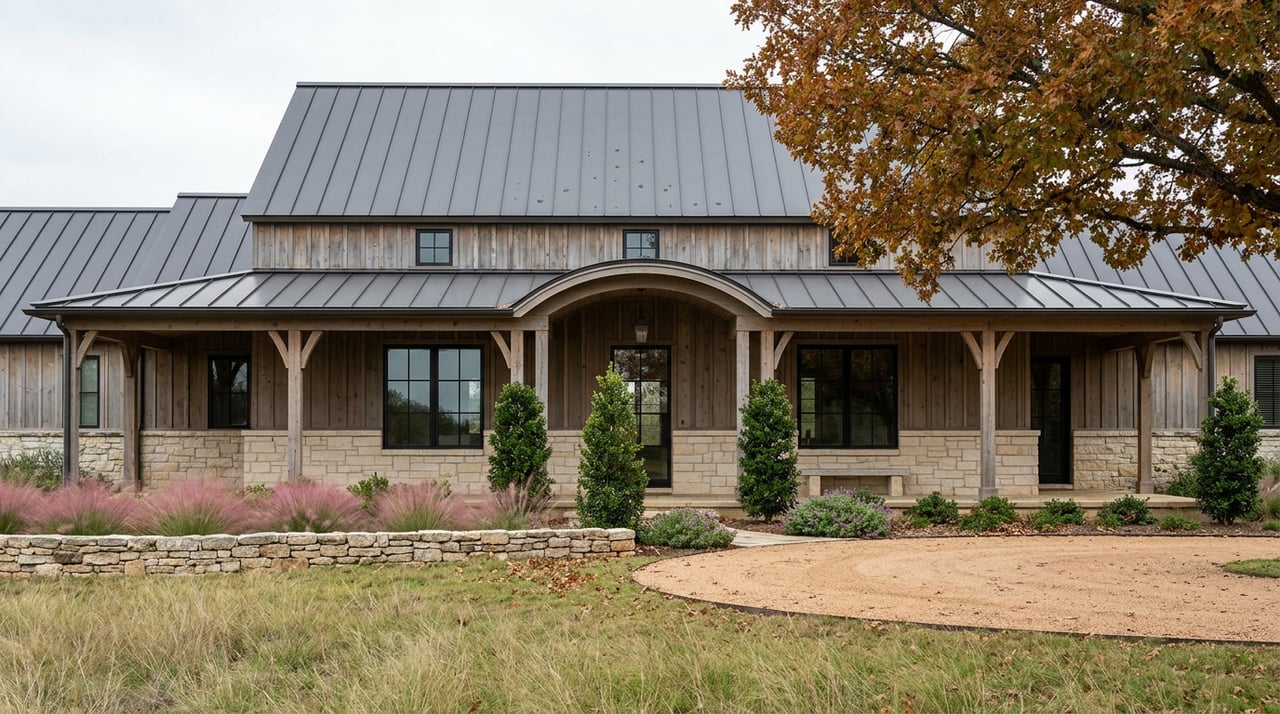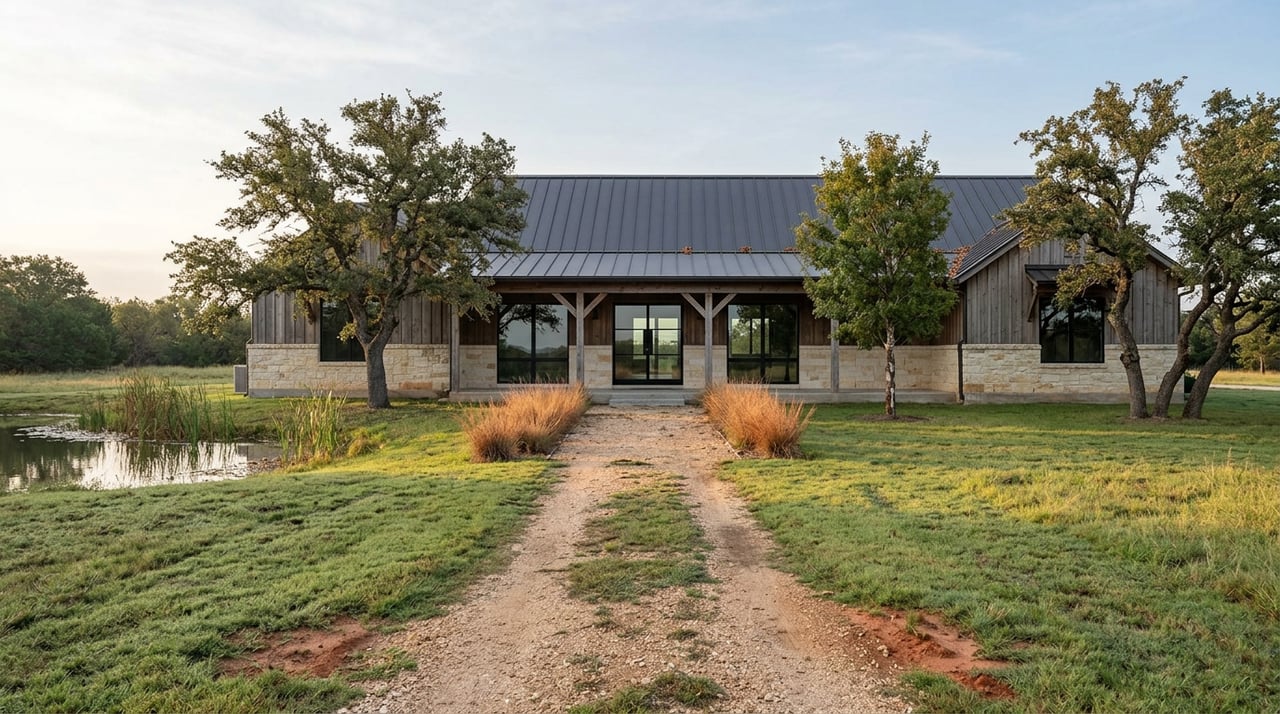
Scroll through acreage listings in eastern Parker County right now and you will see a familiar pattern: ten or twelve rolling acres near Aledo, a barn, maybe a pond, and a property tax line that looks almost too good to be true. A tract that would carry a five-figure tax bill anywhere near Fort Worth city limits shows up taxed in the hundreds of dollars because it carries an agricultural valuation. Buyers see that number, do the math on their monthly carrying cost, and assume it holds.
It doesn't, not automatically, and not forever. The ag valuation on that listing is a snapshot of how the land is being used today, not a promise about what you'll owe once you own it. And in the specific stretch of Parker County where growth is concentrated right now, the gap between what an ag-valued parcel pays and what a market-valued parcel pays is widening fast enough that getting this wrong has become a materially bigger mistake than it was even two years ago.
Two Numbers Live on Every Ag-Exempt Listing
Texas law lets qualifying land be appraised on its agricultural productivity value rather than its market value, which is why that tax line looks so low. To hold that valuation on a given parcel, the Parker County Appraisal District requires that the land have been in a qualifying use, such as grazing, hay production, beekeeping, or wildlife management, for at least five of the preceding seven years, with the application filed by April 30 of the tax year on Form 1-d-1.
Here's the part that catches people at closing or the year after: if the use changes, the county doesn't just reassess going forward. It goes backward. A rollback tax recalculates what you would have owed at market value for the prior five years and adds 7 percent interest per year on the difference. That bill lands on whoever owns the property when the use changes, which is frequently the buyer, not the seller who enjoyed the low valuation for the last two decades.
So the real number a buyer needs isn't the tax line on the listing. It's the spread between the ag value and the market value, because that spread is what gets multiplied by five years and compounded at 7 percent the moment someone builds a home, subdivides a homesite, or brings in a bulldozer before the paperwork catches up.
Why the Spread Is Getting Wider, Not Narrower
That spread tracks market value, and market value in Parker County is behaving differently than almost everywhere else in North Texas right now. Closed-sale data from the regional multiple listing service covering vacant tracts between 10 and 50 acres shows Parker County posting a roughly 4 percent gain in median price per acre for the period from January through early June 2026, compared to the same window in 2025. Neighboring counties moved the opposite direction over that same stretch.
| County | Median price per acre, 10 to 50 acre tracts | Change vs. same period 2025 |
|---|---|---|
| Parker | Up | +4% |
| Denton | $34,455 | -38% |
| Collin | $37,064 | -24% |
| Grayson | ~$30,000 | flat |
Denton led every North Texas county in 2025 and then fell harder than any of them in 2026. Parker moved up while its neighbors cooled. That divergence isn't noise. It's the market pricing in specific, visible demand that isn't showing up the same way elsewhere in the region.
There's a second layer worth knowing before you assume every acre in the county is appreciating equally. Ranch market trackers following Parker, Hood, and Erath counties this year have flagged that average sale prices on ordinary, unremarkable tracts are closing around 84 percent of list price, well below the 95 percent typical of stronger submarkets. The county-wide median is being pulled up by well-located, well-marketed properties near the growth corridor while generic acreage further out sits and takes discounts. If your land, or the land you're buying, isn't in the path of that specific growth, don't assume the county headline applies to your parcel.
The Growth That's Making This Personal
The reason the spread is widening in the first place has names attached to it. At the southwest corner of Interstate 20 and FM 1187, a 317-acre tract that was part of the historic 2,000-acre Dean Ranch is now the center of a proposed $500 million mixed-use development, with commercial space, multifamily housing, single-family homes, and light industrial uses planned. The project is significant enough that Fort Worth and Aledo sued neighboring Willow Park in February 2026 over which city had the legal right to annex it, a dispute that was still working through the 43rd Judicial District Court in Weatherford as of this spring. The developer told The Real Deal that Willow Park's readiness with sewer capacity was the deciding factor in where the project landed, a small detail that tells you how much infrastructure timing now drives which city captures growth in this county.
That's one project. A few miles away in Aledo, the Bluejack Ranch development is bringing more than 600 home lots and a golf course designed by Tiger Woods to over 900 acres. Thirteen miles southeast of Willow Park, the Veale Ranch site has drawn an $88 million infrastructure investment aimed at landing a manufacturing mega-site. And underneath all of it sits Aledo Independent School District, now the largest employer in Parker County with more than 700 employees and nearly 7,500 students, which continues to be one of the primary reasons families leave Tarrant County for this side of the metroplex.
None of that acreage got here by staying agricultural. Land under a decades-old wildlife or ag valuation is exactly the kind of parcel that becomes a subdivision or a commercial pad once a project like this reaches its property line. The more this corridor develops, the higher market value climbs relative to ag value on everything nearby, and the more expensive a rollback becomes for whoever is holding the deed when the tractor gives way to a survey crew.
What to Actually Check Before You Sign
If you're buying or selling ag-exempt acreage anywhere between Weatherford and the Tarrant County line, a few questions belong in your due diligence before the number on the tax bill means anything:
- Ask the seller how long the current use has been in place and whether it satisfies the five-of-seven-year history, not just whether the exemption currently shows on the tax roll.
- Confirm in writing what happens if you intend to build sooner than the transaction implies. Even a home on part of the parcel can trigger a partial rollback on the acreage taken out of production.
- Get an estimate, before closing, of what the property would owe at full market value. That's the number that determines your rollback exposure, and in a market where per-acre values are climbing, that estimate goes stale fast.
- If you're the seller and the buyer plans to develop, negotiate who is contractually responsible for the rollback tax rather than leaving it to default to whoever owns the parcel on the trigger date.
FAQ
Does losing the ag exemption always mean a rollback tax? Yes, if the change in use disqualifies the land from the agricultural or wildlife valuation, Texas law requires the appraisal district to calculate the rollback based on the difference between ag value and market value for the preceding years, plus interest.
Can a new owner inherit rollback liability from a use change they didn't make? The tax attaches to the property and typically becomes due when the disqualifying change occurs, which means a buyer who changes use shortly after closing, or who unknowingly continues a change the seller started, can be the one who owes it.
Is there a way to keep part of a parcel ag-valued while developing another part? Sometimes, if the untouched portion continues to meet the intensity and use requirements on its own, but this needs to be confirmed with the appraisal district on a parcel-by-parcel basis rather than assumed.
Land math in this corner of Parker County isn't static anymore. The same growth that's pulling families toward Aledo ISD and pulling developers toward the I-20 frontage is also raising the cost of misreading an ag valuation. If you're weighing acreage on either side of that line, buying or selling, Edge Real Estate works this market closely enough to walk through the actual numbers with you before you're the one holding the exposure. Let's Connect.